Watermelon
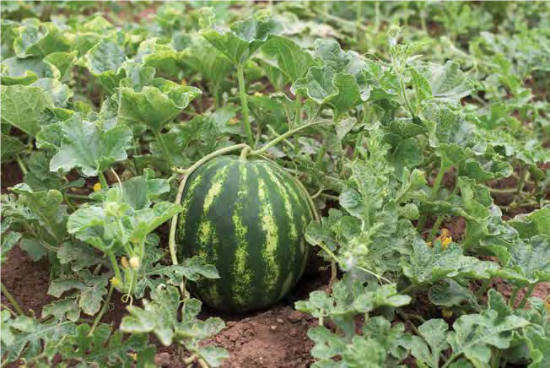
Watermelons are a warm season crop that grows well in the warm, dry days of Kansas summers. The plant grows best in deep, sandy soils; however, small icebox-type watermelons can be grown on upland shallow soils. Most watermelons require a lot of room and are not well adapted to small backyard gardens.
There are a wide range of watermelon varieties, with many different fruit characteristics that will perform well in Kansas. Fruit shape and size, rind color, and flesh color can all be taken into consideration. Varieties with good disease resistance are also beneficial. For gardeners with small spaces, newer varieties with more compact vines have been developed. Para información en español, visite este sitio web.
- Seedless watermelon. Seedless watermelons are produced by growing a specially developed cultivar that is cross-pollinated by a regular cultivar or a provided pollinator variety. Because two varieties are required to produce the seedless fruit, the amount of space needed is not practical for most home gardeners. The seedless cultivars are also less vigorous and more finicky than regular seeded watermelons.
Watermelons thrive in warm soils and warm air temperatures. Plant after all danger of frost is past in early to mid-May, when soil temperature is at least 60°F and air temperatures are consistently above 70°F. Watermelons can be grown as transplants and transferred to the garden. Use a fairly large transplant or peat pot container for best results to avoid disturbing the roots when transplanting.
Standard watermelons require about 50 square feet per plant or hill — 4 to 5 plants together, then thin to the strongest 2 plants after two true leaves have developed. Plant 4 to 5 feet apart in rows 10 to 12 feet apart. Small-vined icebox varieties can be spaced closer together, using 2 to 3 feet between hills in rows 5 to 6 feet apart. Closer spacing of large-vined, large-fruited melons will likely reduce the overall fruit size but may be a good option if garden space is limited.
- Sunlight: Watermelons need a sunny location in order to thrive.
- Watering: Watermelons need plenty of water during early growth, flowering, and early fruit development. Provide one to two inches of moisture per week if not supplied by rainfall. Once the melons have reached full size but have yet to ripen, watering should be minimized to encourage sweet, flavorful fruit with high sugar content.
- Soil and Fertilization: If your garden soil is heavy, plant on ridges or raised beds to improve the soil drainage. Black plastic mulch can help warm the soil, conserve water, and suppress weeds in watermelon plantings. If straw mulch is used, do not apply it until the soil is warmer than 75°F.
- Pests and Diseases: A lack of fruit set is a common issue in watermelons. Like other vining crops watermelons have both male and female flowers. The male flowers show up first and cannot bear fruit. Temperature can also impact the pollination of watermelon leading to lack of fruit set. Aphids and cucumber beetles are common insect pests. Powdery mildew can be an issue depending on the variety being grown.
Watermelons are ready for harvest when the underside of the fruit turns a bright buttery yellow color and when the small, curled tendril where the fruit is attached to the vine has turned brown and died. Thumping larger fruited varieties produces a dull, hollow sound when ripe; however, small icebox types are difficult to thump to determine ripeness. Watermelon will store for 1-2 weeks if held at 45-50°F. Watermelon cannot be preserved for future use however you can make pickles out of the rind.
Watermelon is a refreshing treat no matter the time of the year. Watermelon can be used in a variety of recipes including fresh eating, refreshing drinks, salsas, and many more. Watermelons are mostly water. A two cup serving has 80 calories, is low in fat and is an excellent source of vitamin A and vitamin C.
Watermelon, Black Bean, and Corn Salsa
| Ingredients | Directions |
|
|
Recipe source: North Dakota State University Extension
Melon and Mint
| Ingredients | Directions |
|
|
Recipe source: Alabama A&M and Auburn University Extension
Watermelon Fruit Pizza
| Ingredients | Directions |
|
|
Recipe source: North Dakota State University Extension