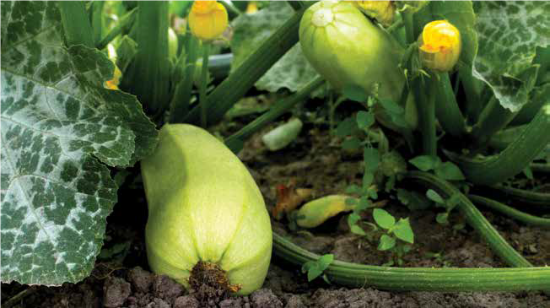
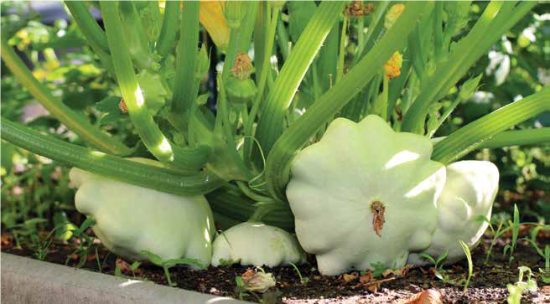
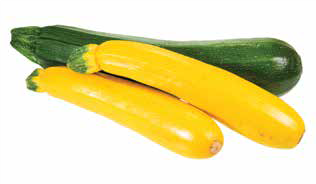
Summer squash, which include zucchini, are used in their young or immature stage and usually grow on compact, non-sprawling vines. Zucchini are a subset of summer squash, and typically have thicker, smooth skin. Other types of summer squash include crookneck, straightneck, and patty pan types. Some pumpkins and winter squash can be harvested at the immature stage and eaten as a summer squash, although they may not be as flavorful.
Most types of summer squash will perform well in Kansas. Varieties that are resistant to powdery mildew may be beneficial. Early maturing varieties may be helpful in providing a crop before insect pressure causes damage to the plants. Most summer squashes are very susceptible to squash bugs and squash vine borers. Related plants such as Tromboncino (a Cucurbita moschata squash), luffa gourd, or snake gourd are more tolerant of squash bugs and vine borers. These plants can be grown and harvested at young stages and consumed as summer squash, although the flavor is somewhat different. These plants also have vigorous vines that benefit from trellising. Para información en español, visite este sitio web.
Squash are warm-season crops that are damaged by freezes. Plant seeds directly in the garden after all danger of frost has passed; early May is a traditional planting time, although squash can be planted at any point during the summer. Regular re-planting can help circumvent insect problems and provide a more consistent yield. A planting of summer squash for a fall harvest can be made in July to early August. Summer squash can be planted 2 feet apart in rows at least 3 feet apart. Some summer squash varieties will grow long vines and need more space while others are compact growers. Be sure to read the seed label to determine which kind you have. Some plants can be grown upright using posts or netting in areas with space concerns. Squash benefit from the soil-warming and weed-control properties of black plastic mulch.
Sunlight:Provide full sunlight for summer squash for the best production. Summer squash are prone to powdery mildew which can be worse in lower light conditions.
Watering:When plants are young provide one to two inches of water per week if rainfall doesn't provide it. When plants are established, squash are fairly tolerant of drier soil conditions, although consistent moisture during fruit development will help prevent blossom end rot problems
Soil and Fertilization:Side dress with fertilizer when the plants begin to spread out their vines, using one-half cup of 46-0-0, or one cup of 27-3-3, or 3-½ cups 10-3-1 for each 100 feet of row.
Pests and Diseases:Squash bugs and squash vine borers are the biggest insect pests of summer squash. Information on controlling squash bugs can be found on theSquash Bugspublication. To learn more about controlling squash vine borers check out theSquash Vine Borerpublication.
Another common issue of summer squash is lack of fruit during the early season. Squash have both male and female flowers on the same plant. The male flowers are the first ones to appear but they cannot produce a fruit.
Succession Planting:Planting multiple crops of summer squash can help reduce insect issues.
Summer squash are harvested at an immature stage — before the skin and seeds have toughened. Usually harvesting when they are 6 to 10 inches long is preferable. Squash develop quickly, and regular harvesting is important to encourage continued production. Summer squash should be stored in a refrigerator for only a short time because they are prone to drying out. Summer squash can be preserved by freezing it, canning it in relishes or drying the squash. It is no longer recommended to can slices of summer squash. For more information on freezing summer squash check out this page. For a recipe on squash pickles check out this website.
Summer squash is a very versatile ingredient in the kitchen. They can be grilled, fried, shredded, and even used in a variety of baked goods. One cup (100 g) of sliced, fresh summer squash has approximately 18 calories, 1 g fiber, and 1 g protein. They are an excellent source of vitamin C. Cooked squash will have essentially the same calories, fiber, and protein, but will lose approximately 75% of the Vitamin C during the cooking processSNAP-Ed
Summer Squash Bread
Ingredients
Directions
3 eggs, beaten
2 cups white sugar
1 cup vegetable oil
2 tsp vanilla extract
3 cups all-purpose flour
3 tsp baking powder
2 tsp ground cinnamon
2 tsp ground nutmeg
2 cups shredded summer squash (fresh or frozen and thawed, but not dried)
Preheat oven to 325 degrees F (165 degrees C).
Grease two bread pans approx. 9 x 5 inches.
In a large mixing bowl, beat the eggs until fluffy. Beat in the sugar, oil, and vanilla.
Gradually mix in the flour, baking powder, cinnamon, and nutmeg.
Fold in the squash. Transfer to the prepared baking dish.
Bake approximately 45 minutes in the preheated oven, until a knife inserted in the center comes out clean.
You may have to make adjustments for your altitude. Option 1: add ¼ - ½ cup chopped pecans or almonds. Option 2: sprinkle ¼ cup brown sugar on the surface before baking. Option 3: replace the oil with 1 cup applesauce.
Dressing for quinoa mix: 2 tablespoons lemon juice 2 tablespoons olive or canola oil
Preheat the oven to 375 F.
Line a baking pan with parchment paper or use non-stick cooking spray.
Wash, dry and cut zucchini into halves.
Scoop out the flesh of the zucchini with a spoon.
Drizzle zucchini with 1 Tbsp. of olive or canola oil.
Bake 25 to 30 minutes until tender.
While zucchini is cooking, combine the quinoa and water and cook by following the directions on the package.
Drain any excess water from quinoa, then add garlic powder, dried basil, oregano, grape tomatoes, red onion, chickpeas and feta to the mixture and combine all ingredients.
Mix oil and lemon juice in a separate container, then add to the quinoa mixture.
2 small yellow summer squash or zucchini (or one of each)
1 small onion
1 Tbs butter or margarine
1/4 tsp black pepper
Wash hands with soap and water.
Gently rub produce under cold running water before preparing ingredients.
Cut summer squash or zucchini into ¼-inch rounds.
Cut onion in half and then into thin slices.
Gather two large pieces of foil. Divide cut squash and zucchini evenly between foil pieces. Divide butter and black pepper evenly between foil packets. Fold foil to seal all sides.
Grill over indirect heat for 15-20 minutes or until vegetables are tender. To bake, preheat oven to 350°F and bake in foil for 30-45 minutes.