Radish
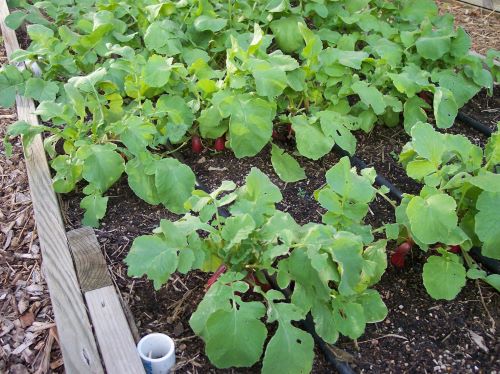
Radishes are a cool-season vegetables that are divided into spring and fall types. Spring radishes are typically smaller and quick to mature. Fall radishes, which include daikons, require a longer growing season and are typically milder in flavor. Radishes need a sunny location and can be grown in early spring and as a fall crop. As the weather gets hot, however, the flavor of radishes becomes strong and hot. Most radish varieties will perform well in Kansas if planted at the correct time. Para información en español, visite este sitio web.
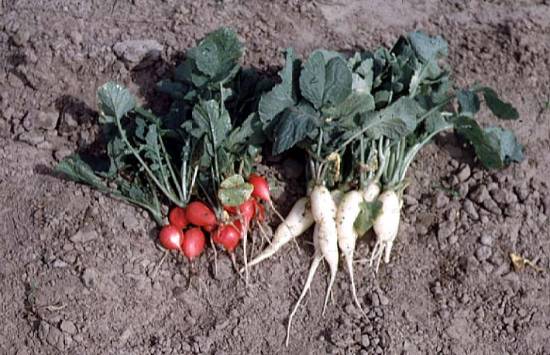
- Spring radishes. Most spring radishes are round, although some are more oblong. Spring radishes are most commonly red, although there are white, pink, purple, yellow, and multicolored types. Some varieties are longer-maturing, which should be considered if another crop will be planted after the radishes.
- Fall radishes. Fall radishes, including daikons, are typically much larger than spring radishes. Many fall radishes are oblong or carrot-shaped and can be 2 to 3 inches in diameter. These radishes require a longer growing season and are best planted in the fall. For spring planting, choose early maturing varieties that are slow to bolt.
Plant spring radishes in mid- to late March for a spring crop. Plant fall radishes in early August for In loose soil, radishes can easily be pulled, especially if the soil is moist. For elongated radishes in heavy soil, a spading fork may be necessary. Store excess radishes by removing the tops and placing in plastic bags in a refrigerator. Spring radishes will remain good for a week or more. Fall radishes can be stored for a few months. Radishes do not freeze well and there are no safe recipes for canning radishes so fresh eating is the best option for this vegetable. While radishes often get a bad reputation due to their spicy taste in the warmer parts of the year they are a wonderful vegetable to eat. A half cup of sliced raw radishes contains around 10 calories, 2g carbohydrates, and 1g fiber. While radishes do not contain much protein, fat, or sodium, they do have vitamins and minerals, including vitamin C, folate, potassium, and calcium.The daikon radish is a common vegetable in Asian cuisine. Use them in stir-fry, kimchi or pickle them. Raw daikon radishes are delicious in salads and slaws. Daikon radishes are a source of fiber, vitamin C, and potassium. Try them fresh or cooked! Recipe source: University of Illinois Extension Recipe source: North Dakota State University Extension Recipe Source: University of Illinois Extension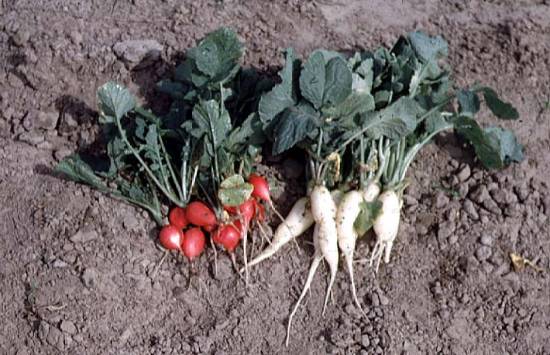 a fall crop. Radishes can be grown in narrow 15-inch rows, and in bed or wide-row plantings. Spring radishes need 1 to 2 inches to enlarge the root, so thin out thickly planted seedlings to this spacing. Fall radishes are much larger and should be thinned to 4- to 6-inch spacings to allow for mature roots. Plant seeds ¼ to ½ inch deep. Plant 3-5 feet of row per person for fresh use. Expect about 10 bunches of radishes per 10 linear feet of planted row.
Daikon Radish Roast
Ingredients
Directions
Roasted Radish and White Bean Salad
Ingredients
Directions
Sauteed Radishes
Ingredients
Directions