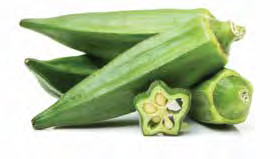
Okra is a tall-growing, warm-weather vegetablethat is easy to grow in Kansas gardens.The edible parts of the plant are the youngtender pods that develop following flowering.The plant will continue to bloom and producepods up the stalk as the season progresses.Most varietiesof okra will perform well in Kansas. Mostgardeners prefer spineless varieties. Some varieties will remain tender even withlarger pods. Some varieties are more likelyto produce side branches, which can increaseyield in a small garden space. Para información en español, visite este sitio web.
Okra requires warm weather, and mid-May is a desired planting time, once all danger of frost ispast. Soil temperatures should be at least 65°F, and germination will occur more quickly with warmer soil temperatures. Soaking the seed overnight can also speed germination. Okra may be transplanted or direct-seeded. Plant seeds an inch deep and thin to one plant every 12 to 18 inches in the row, with rows no closer than 3 feet apart. Later in the season after the plant is tall, you can cut it off about 12 inches from the ground. Use pruners or a saw because okra stalks are very tough. The plant will send up a new stem for pod production into the late summer or fall season.
Sunlight:Okra requires full sun (a minimum of 8 hours of light) in order to perform well. Be careful where you plant okra as it can shade out other plants as it gets taller.
Watering:Okra does fairly well in hot, dry seasons with periodic, thorough watering.
Soil and Fertilization:Okra will grow well in a wide variety of soil types and requires only minimal levels of fertilizer. Excessive nitrogen results in excessive vegetative growth and poor production. Avoid planting in soils that stay water-logged.
Transplanting:Okra seeds don't transplant well. Use peat pots to reduce the chance of transplant stress.
Pests and Diseases:Okra is a relatively pest and disease free plant in the garden. Control weeds around the plants when they are small.
Seed Saving:Seeds can be saved from one year to the next on open pollinated varieties. To do this, near the end of the season, allow a few pods to fully mature. When the pods are mature, remove them from the plant and allow them to dry. The seeds can be removed from the pod and saved. Compost the rest of the plant material at the end of each season. Many cultivars available today are hybrids that do not produce seeds that are true to type. Plants from hybrid seeds may not produce the same color, size, or shape as the parent plant.
Cut the pods from the plant when they are no longer than your finger to ensure that they will be tender, not woody. Harvesting every other day might be necessary. Some people are sensitive to the small spines on the okra leaves, which cause itching or rashes. Wear long sleeves and gloves to prevent this during harvest. Okra can be stored for 7 to 10 days at temperatures of 45 to 50°F. Storing at colder temperatures will result in pod discoloration, although they will still be edible. Okra can be preserved. For more information on freezing okra check out the Center for Home Food Preservation. To can okra check out this article on canning Okra.
Okra is a popular vegetable in southern cuisine but has become popular all over the United States. One reason people may not like cooking with okra is themucilage they produce. Mucilage is the “slime”/”goo” that is released as soon as you cut into a pod and smaller pieces can produce more mucilage in your cooking compared to bigger pieces. This is one of the reasons many do not like to eat okra. Work with speed and make bigger cuts so as to reduce this mucilage if that’s what you are after.
Oldways Okra and Corn
Ingredients
Directions
1 to 2 tsp extra-virgin olive oil
6 ounces fresh okra, rinsed and dried very well, with cap sliced off, and then sliced in half lengthwise
1-2 cloves garlic, minced
2 cups cooked corn
Pinch of cayenne
1 tsp apple cider or white vinegar
Salt, to taste
In a large skillet, heat the olive oil on medium heat until very hot (but not smoking). You want to make sure the okra hits a hot pan.
Add the okra to the pan and sauté, stirring occasionally, until lightly browned on both sides, about 5 to 6 minutes. Remove the okra from the pan and set aside.
Lower the heat slightly and add the garlic, cooking for 30 seconds until browned, but not burned.
Add the corn and cayenne, stirring occasionally until corn is slightly browned, about 2 to 3 minutes. Return the okra to the pan, add the vinegar, and stir to reheat for about a minute. Serve immediately.
½ lb of okra, fresh or frozen, cut into bite-sized pieces
1 cup cornmeal
½ tsp smoked sweet paprika
½ tsp garlic powder or garlic granules
½ tsp sea salt
Preheat your oven to 400°F. Rub a light coating of olive oil on a baking sheet.
Thaw the okra if using frozen. This recipe calls for half of a 16 oz bag of frozen okra; pour half of the okra into a sealable plastic bag and thaw in warm water (so you won’t thaw the whole bag).
While the okra thaws, mix the cornmeal, paprika, garlic powder, and sea salt in a bowl.
Stir well, to evenly spread the ingredients.
Once the okra is thawed, take each pod and roll it through the cornmeal and spices, covering all sides.
Place all covered pods on the baking sheet.
Bake the okra at 400°F for 25 minutes or until the bites are golden brown.
Serve as a snack or the perfect side to a plate of other veggies, potatoes, or black-eyed peas.
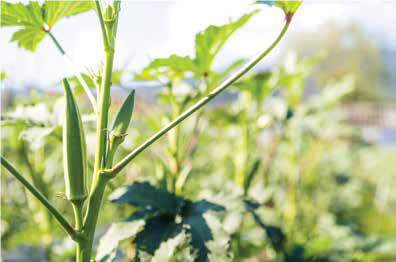 Okra is a tall-growing, warm-weather vegetable that is easy to grow in Kansas gardens. The edible parts of the plant are the young tender pods that develop following flowering. The plant will continue to bloom and produce pods up the stalk as the season progresses. Most varieties of okra will perform well in Kansas. Most gardeners prefer spineless varieties. Some varieties will remain tender even with larger pods. Some varieties are more likely to produce side branches, which can increase yield in a small garden space. Para información en español, visite este sitio web.
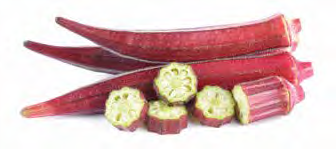 past. Soil temperatures should be at least 65°F, and germination will occur more quickly with warmer soil temperatures. Soaking the seed overnight can also speed germination. Okra may be transplanted or direct-seeded.