Mesclun
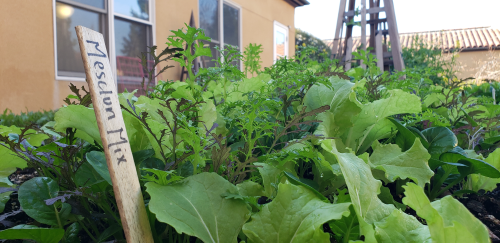
Mesclun is a mix of leaf lettuces, herbs, and tender greens. Various mixes are sold by seed companies. These mixes offer gardeners complete salads within a single package. Mixes are packaged with maturity in mind. Most plant varieties within a given mixture mature at roughly the same time. Since mesclun doesn't require a great deal of space, it is ideal for gardeners with limited space or those gardening in containers.
Mixes vary tremendously in flavor. Mild mixes combine familiar types of leaf lettuce with greens such as mizuna, purslane, and chervil. Some have a peppery bite with cresses, Asian mustards, red kale, arugula, red and green chicories, or endive. Besides being a treat for the tastebuds, mesclun is also a treat for the eye. Various shades of green may be combined with reds and bronzes. Leaf textures may be soft and rounded to sharply serrated. Para información en español, visite este sitio web.
Plant only as much mesclun as you can eat regularly. A 2-foot by 2-foot block should provide enough for several salads over the course of a week. When sowing the seed in rows, make a furrow that is 1/4 inch deep, sow the seed, and then cover the furrow. If you are sowing in blocks, simply scatter the seeds, then cover with about 1/4 inch of fine soil or compost. After germination, thin seedlings to a final plant stand of about an inch apart. Thinned sprouts can be added to salads so accidental over planting isn't necessarily a waste of seed.
- Sunlight: Like other leafy greens, mesclun needs at least partial sunlight or a minimum of 4-6 hours of light for best growth. Provide afternoon shade if possible to extend the growing season.
- Temperature: This mix of plants grows best in cooler weather conditions and the taste may become bitter during the heat of the summer.
- Watering: Many of the crops grown in mesclun mixes are shallow-rooted and require regular watering. Soil should remain moist but not soggy. Best flavor comes when the mix of plants is kept consistently moist. Plants exposed to dry conditions may become bitter flavored.
- Soil and Fertilization: Apply ¼ cup of a nitrogen based fertilizer (21-0-0) per 10 foot of row 4 weeks after transplanting or at thinning to encourage rapid plant growth. Place the fertilizer to the side of the plants and irrigate it into the soil.
- Pests and Diseases: Mesclun is relatively pest free since it has such a short growing season. Aphids or other insect pests of lettuce can occasionally become an issue.
- Succession Planting: Succession plantings (sowing seeds weekly) in the spring work well for this type of crop. Additional plantings can be made in late summer and early fall.
Harvest mesclun by the cut-and-come-again method. When greens are about 4 to 6 inches long, snip them off with scissors, about 1 inch above the soil. Cutting at this level will not damage the crown of the plants. Clear-cut an entire area at a time. After harvest, water and lightly fertilize the area to encourage vigorous regrowth. Depending on weather conditions, this area should be ready for harvest again within a month. Most planting blocks yield about 3 or 4 harvests a season. Once harvested, rinse the leaves in cool water to remove dust or dirt. Examine the greens for weeds or insects and drain on towels or pat dry. Use as soon as possible. If it isn't possible to use all the mesclun at once, wrap the leaves gently in slightly damp towels, seal in a plastic bag and place in the refrigerator. If handled and stored properly, greens should stay fresh for several days. If harvested mesclun becomes slightly wilted, it can be revived by placing in cool water. Crisping will take ten to fifteen minutes.
Mesclun can be used like other leafy greens in salads, as toppings for sandwiches or as a garnish for other dishes.
Tortilla Wraps
| Ingredients | Directions |
|
|
Recipe Source: North Dakota State University Extension
Southwestern Chicken Salad
| Ingredients | Directions |
|
|
Recipe source: University of Nebraska-Lincoln Extension
Strawberry Mango Mesclun Salad
| Ingredients | Directions |
|
|
Recipe source: Allrecipes.com