Lettuce
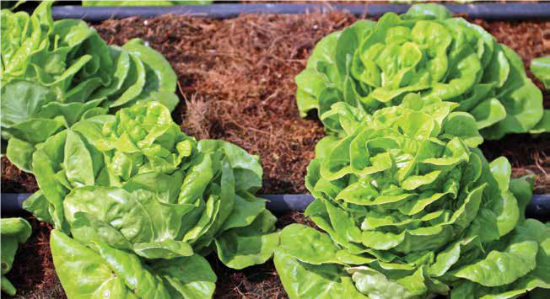
Lettuce is a cool-weather crop that is fairly cold-tolerant. However, the thin, fragile nature of the leaves makes them susceptible to freezes and drought. Lettuce is best grown as a spring or fall crop. There are several different types of lettuce. Para información en español, visite este sitio web.
- Leaf type. On leaf types of lettuce, leaves are loosely arranged. Leaf lettuce matures rapidly and is the most reliable type to grow in Kansas, especially from seed. Many leaf lettuce types are more heat-tolerant than other types. In addition to more traditional leaf shapes, this group also encompasses oakleaf and lolla types. Oakleaf lettuces have heavily lobed leaves that look much like an oak leaf. Lolla lettuces have highly curled or frilled edges, making them high-yielding and attractive.
- Romaine or cos. This lettuce forms a loose, upright head with thick midribs and stronger-flavored, crisp leaves. Most romaine lettuces take longer to reach maturity than leaf lettuces, and many have better bolt resistance than other types.
- Butterhead or Bibb. This succulent lettuce is characterized by tender, rounded leaves that form a loose or soft head. The center of the heads often develops a light yellow, buttery appearance. It takes longer to grow than leaf lettuce.
- Head or crisphead. Head lettuce takes nearly twice as long as leaf lettuce to develop. It is most reliably grown using transplants, and the fall season is the best time to grow head lettuce in Kansas.
- Summer crisp or Batavian. These lettuces are a type of crisphead, with thick, crisp leaves, but have been developed to have more heat-tolerance than other lettuces. They do not develop firm heads but are typically harvested as looseleaf or soft heads. Some of these types also germinate better in hot weather than other varieties.
Lettuces come in a wide range of colors, from various shades of green, red and green variegated, and light to dark reds. Red varieties can be more strongly flavored and more prone to developing bitterness as the weather gets hot in the early summer. For spring planting, select varieties that have good heat tolerance and bolt resistance. For fall planting, select varieties that have strong cold hardiness. Early maturing varieties are always beneficial due to our variable spring and fall weather. You may also choose to stagger plantings of different types of lettuces throughout both the spring and fall planting seasons to extend the harvest. While we think of growing lettuce in the ground, it can also be grown indoors in the winter for a fresh vegetable through the cold weather. Lettuce can be direct-seeded and transplanted successfully. Doing both can extend the harvest season in spring and fall. For a spring crop, sow lettuce seed or set plants in mid-March to early April. For a fall crop, sow seeds or set plants in mid- to late August for leaf or Bibb types, or in late July to early August for head or romaine types. If starting seeds indoors for transplanting, plant 4 to 6 weeks before the desired transplant date. Transplants should have 4 to 6 true leaves when set in the garden. Sow seeds thinly ¼ inch deep, and water consistently until the lettuce emerges. Thin to a plant every 6 to 8 inches or set transplants at this spacing. Rows may be as close as 12 to 15 inches apart. Seeds planted in cool soil will germinate slowly, but seeds planted in soil that is warmer than about 85°F will not germinate at all. Lettuces can be harvested at any stage of growth. It is best to harvest lettuce earlier rather than later as it can become bitter and tough. For baby leaf lettuce, harvest leaves when 3 to 4 inches long. Thinned seedlings can also be used as baby leaf salads. Cutting every other plant allows the remaining plants more space to grow. At 50 to 60 days, leaf lettuce has reached its maximum size. For full-size plants, cut the heads slightly above ground level and remove damaged, dirty, or excess leaves. Select full-sized leaves of leaf lettuce individually so that the plant will continue to produce. Store lettuce in a plastic bag in a refrigerator immediately after harvest because it will become limp quickly. A 10 foot row will yield 4-6 pounds of lettuce depending on type grown. Plant 5-10 feet of row per person. Leafy green vegetables are nutrient rich because leaves contain the light-catching, energy-converting machinery of plants. Salad greens contain Vitamin A, Vitamin C, beta-carotene, calcium, folate, fiber, and phytonutrients. While we mostly think of lettuce in salads, it can also be used in a variety of different recipes. Dressing: Salad: Recipe source: University of Illinois Extension For Cilantro Dressing Recipe source: Utah State University Extension Recipe source: Oklahoma State University Extension
BLT Pasta Salad
Ingredients
Directions
BBQ Chicken Lettuce Wrap
Ingredients
Directions
Taco Bowl
Ingredients
Directions